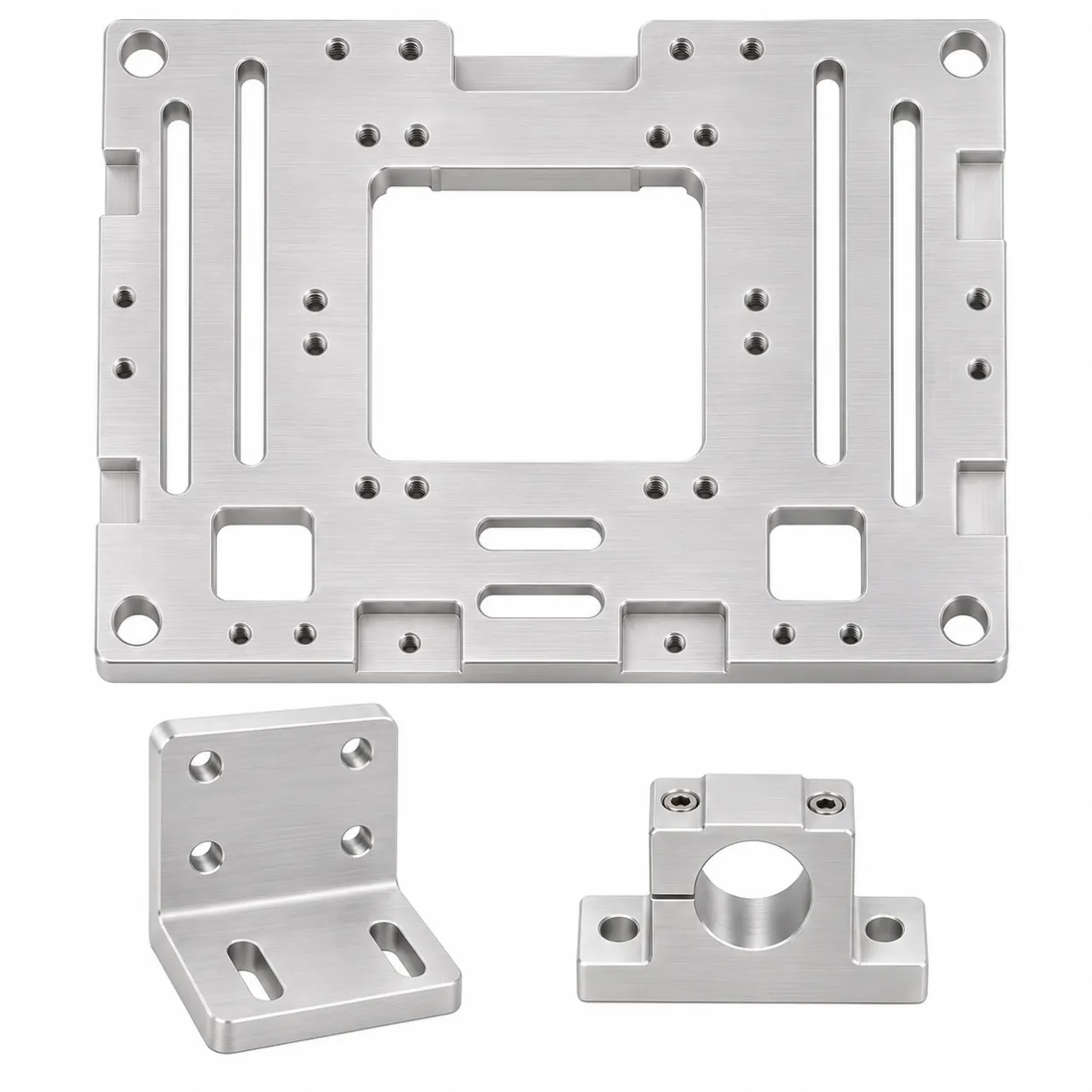
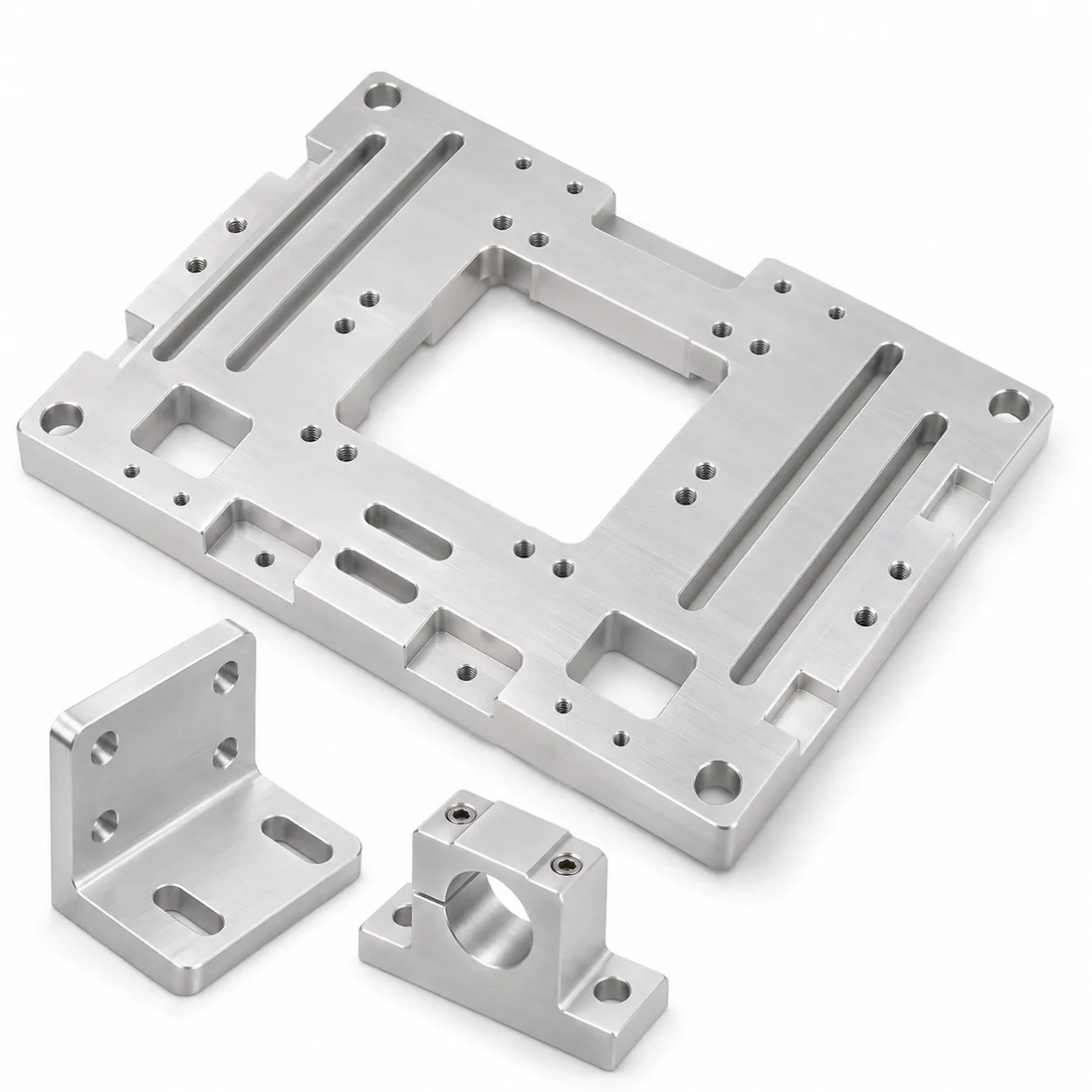
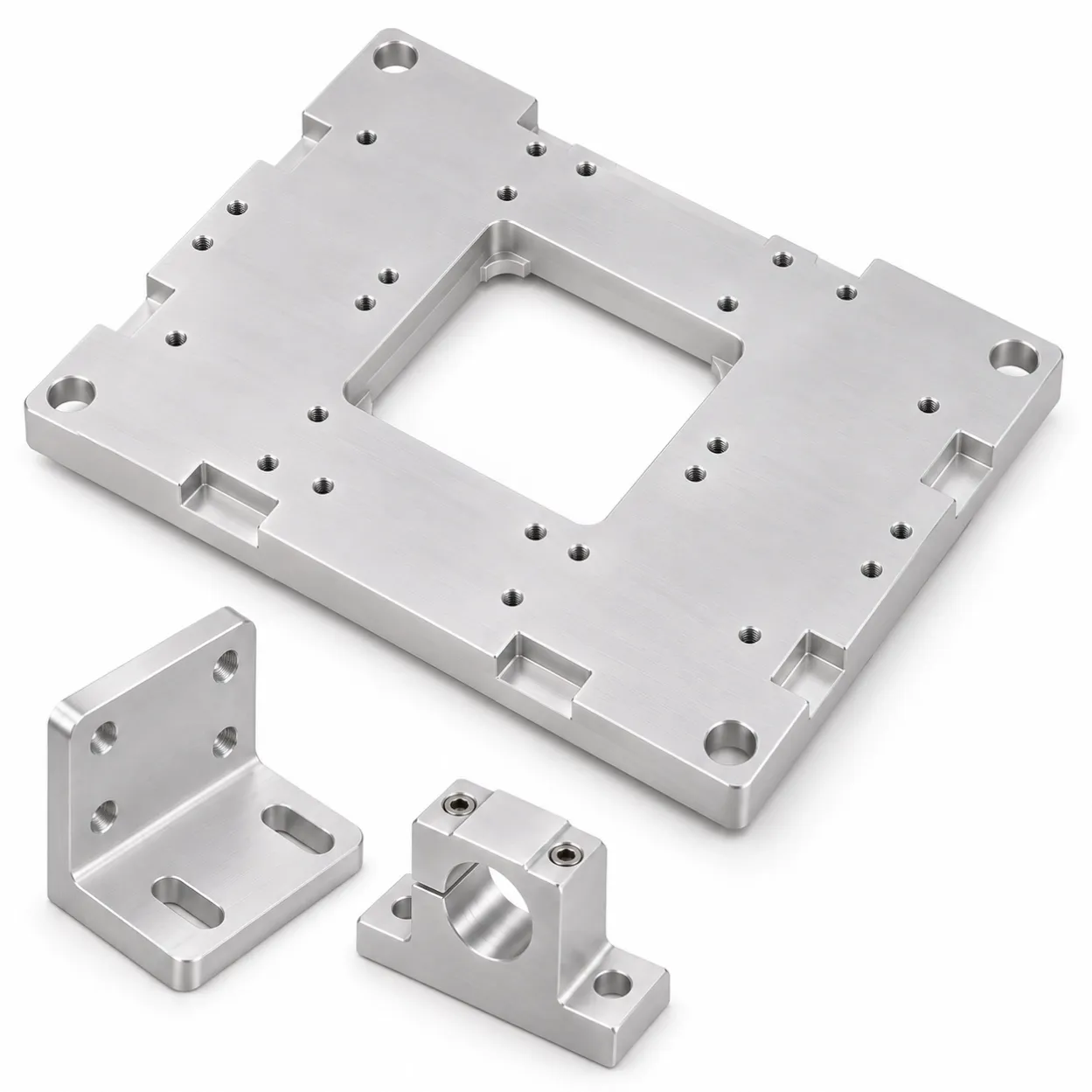
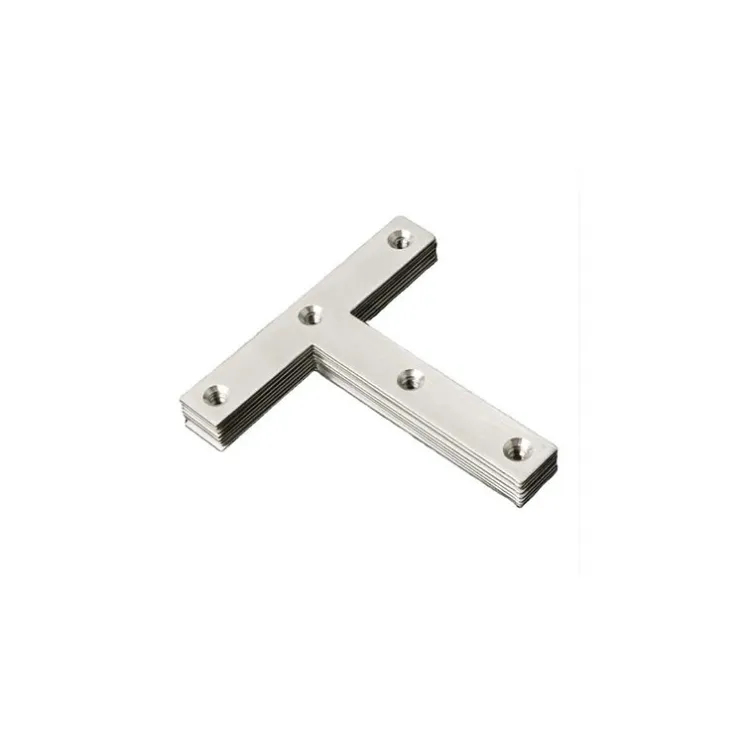
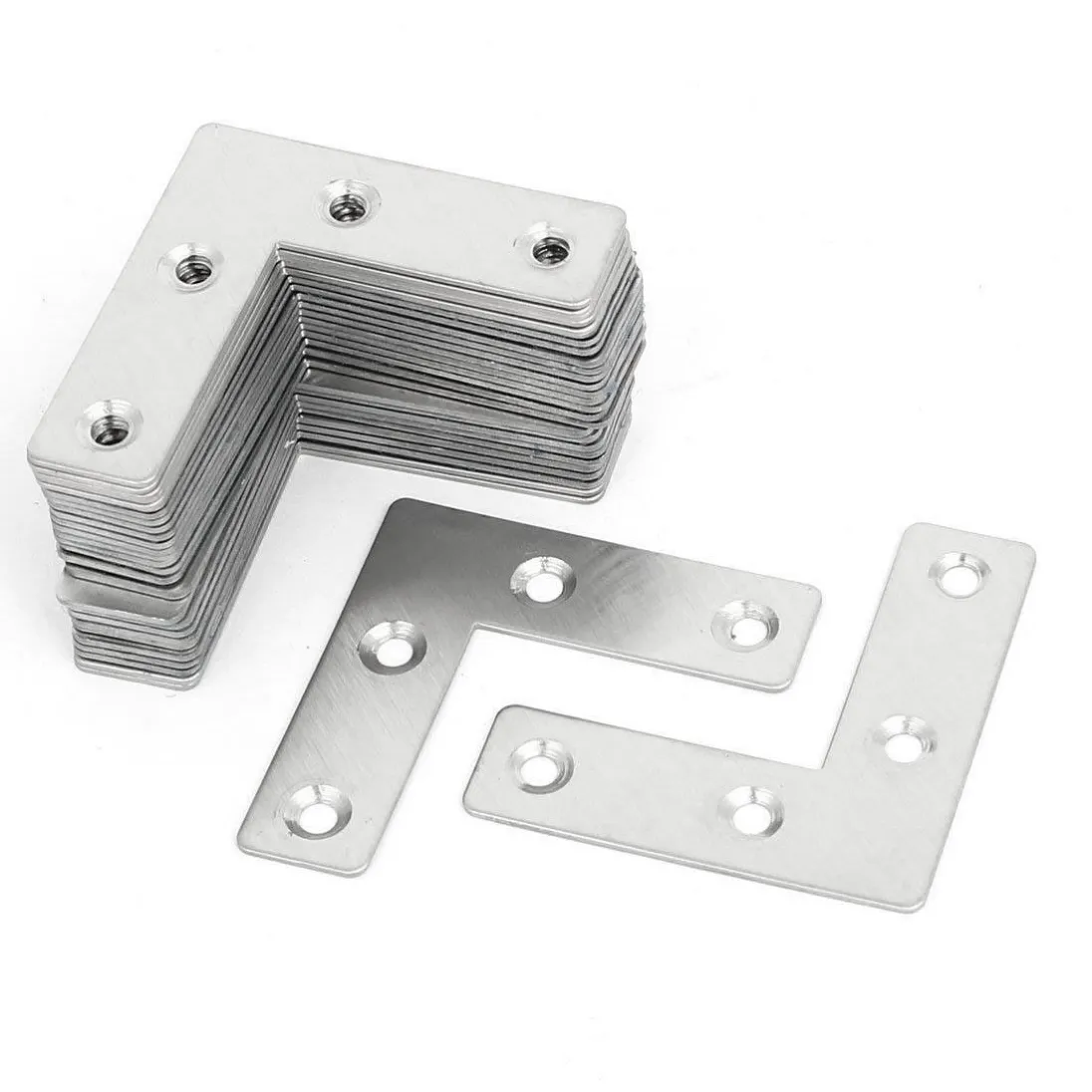
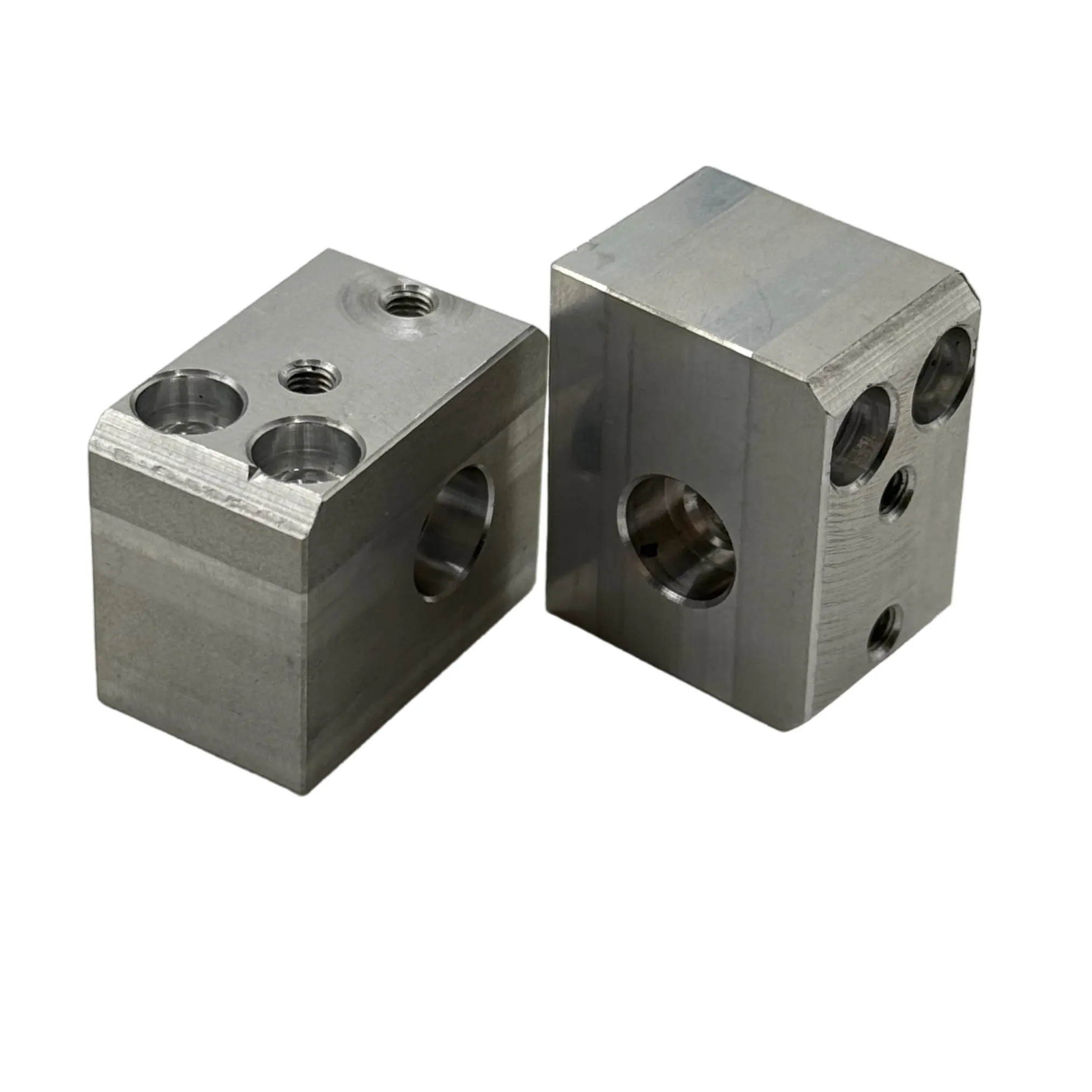
A mounting plate is the flat, precisely machined interface between a component and the machine base or frame beneath it. Shenzhen Andeyuan CNC mills custom mounting plates to your drawing for machinery builders, equipment manufacturers, automation projects and OEM customers worldwide, in one-off, prototype and repeat production quantities.
Where Mounting Plates Are Used
Mounting plates are the foundation pieces of machine building. They serve as fixture and jig bases that hold a workpiece in a known position, as machine bases and sub-bases that carry an assembly at a set height, and as adapter plates that reconcile two mismatched bolt patterns — one face drilled for the component, the other for the frame it must join. Motor and gearbox mounting plates locate the drive unit square to the machine and hold its shaft line in position. Linear-motion components such as rails and actuators are commonly mounted on machined plates that give them a flat, parallel seat. Electrical enclosures and control panels use plates as internal mounting panels, and aluminium-profile frames use end plates and base plates to close and anchor the structure. In each case the plate's job is the same: a flat reference surface, a defined hole pattern, and a rigid connection that keeps everything mounted on it in the position the designer intended, through assembly, service and repeated changeovers.
Construction and Specification
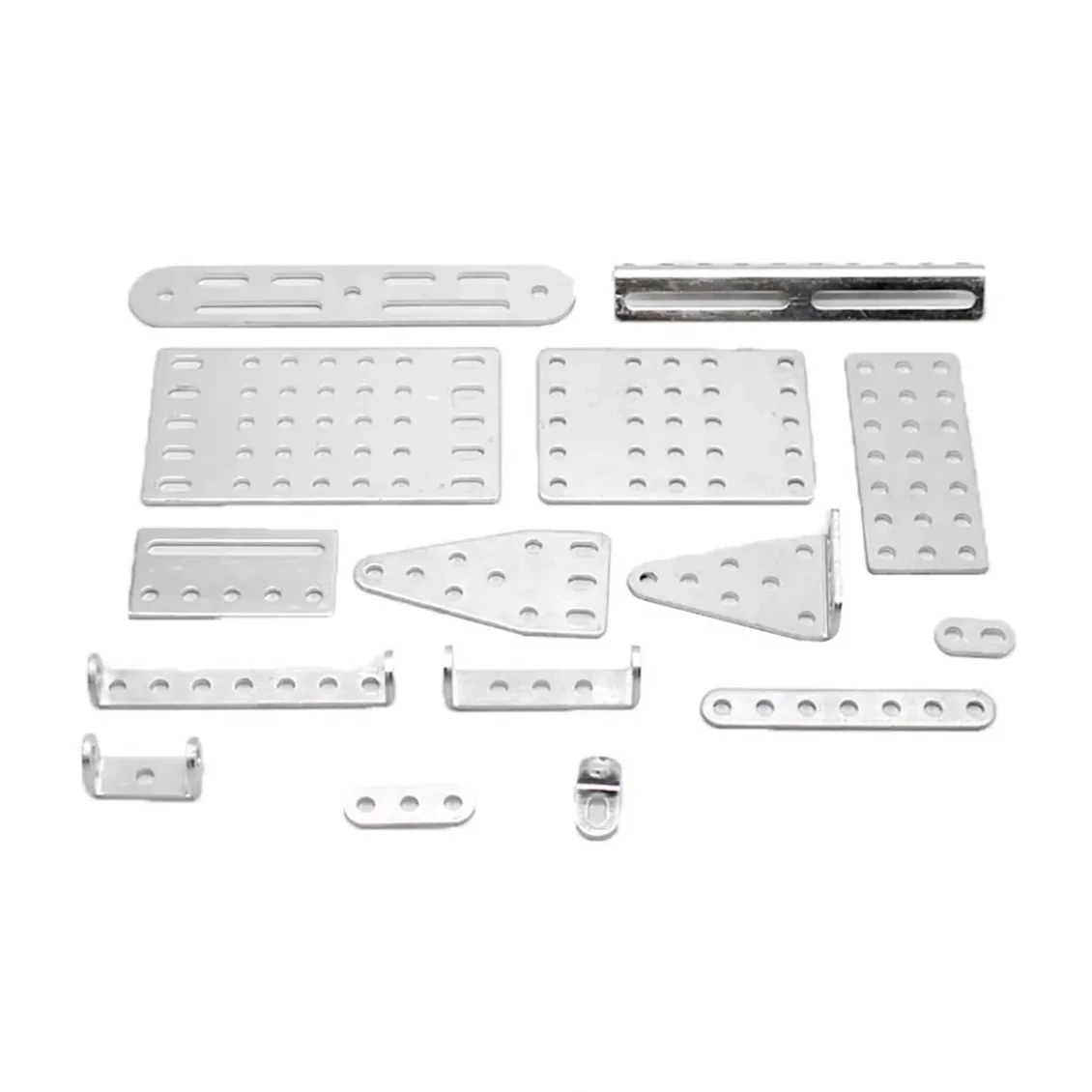
A custom mounting plate is milled on up to six surfaces where flatness and parallelism matter, and carries exactly the hole pattern the application needs — typically corner hole patterns, with each hole on the same plate individually specifiable as a through hole, counterbore, countersink or tapped hole. Buyers also specify large centre holes and bores (with a fit tolerance such as H7 where the drawing calls for one), milled pockets that reduce weight or recess a component, cut-outs, slots, and non-rectangular profiles that follow the outline of the machine. Edge chamfers are machined as drawn. Machining is chosen over laser-cut sheet when the plate is thick, when flatness and hole position must be precise, or when counterbores, tapped holes or a fitted bore are required — features sheet cutting cannot produce — and it suits low volumes without tooling. Sheet cutting wins for thin, simple plates in quantity, and casting wins for high-volume ribbed shapes that then need CNC finishing. For reference, one large supplier's configurable range for six-surface milled plates runs roughly 25–200 × 10–200 mm with thicknesses of 3–30 mm and holes in the M3–M8 range, but that is a single catalogue envelope, indicative only. Your plate is made exactly to your drawing, which defines the overall size, thickness, material, hole pattern coordinates, the specification of each hole, any centre hole diameter and fit, flatness, parallelism and hole-position tolerances, and the edge chamfer. Plates are machined in aluminium, stainless steel or other materials as specified on your drawing.
How to Order
Send your DWG, PDF or STEP/STP file and we mill the plate exactly as drawn — hole pattern, pockets, cut-outs and profile included. MOQ is from 1 piece, so a one-off adapter plate or a single prototype base costs no more to start than a production run, and repeat orders follow the same drawing for as long as you need them. Samples are produced in about 7 days, subject to the drawing. If a mating component changes and the bolt pattern moves, send the revised drawing and the next plates match it. Every plate is produced under ISO 9001:2015 certified quality management at Shenzhen Andeyuan Plastic Hardware Co., Ltd. in Shenzhen, China, and supplied to customers worldwide.