Brass Fittings & Connectors
Hose Barb Fitting
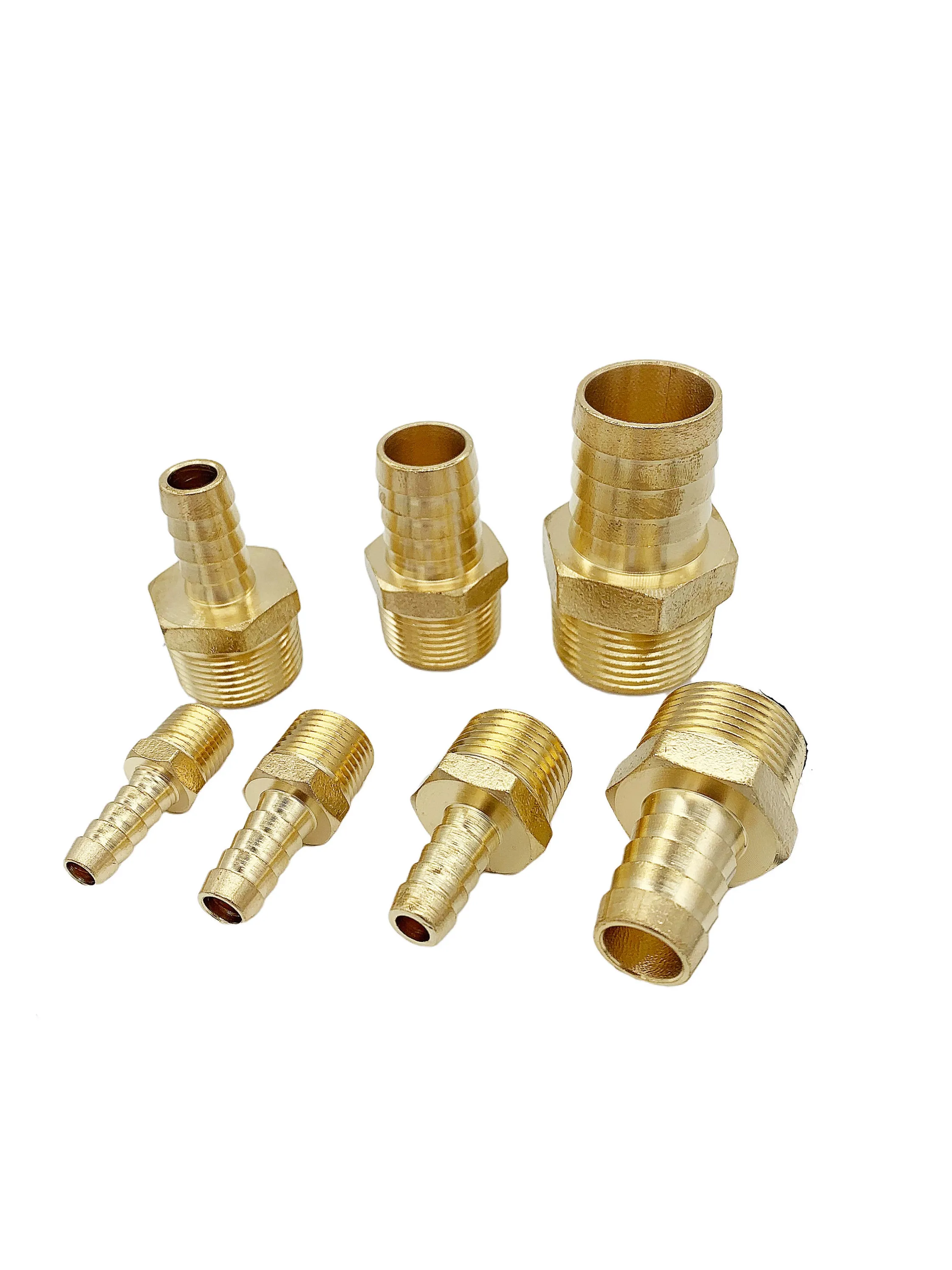
Custom Brass Hose Barb Fittings, Made to Your Drawing. We manufacture brass hose barb fittings, hose tails and barbed hose connectors for fluid, air and water systems, supplied to importers, distributors and equipment makers worldwide. Each fitting is CNC machined from brass to your drawing, with barb profile, hose size, thread and length exactly as specified. A flexible source for non-standard hose fittings in prototype, small batch and volume orders.
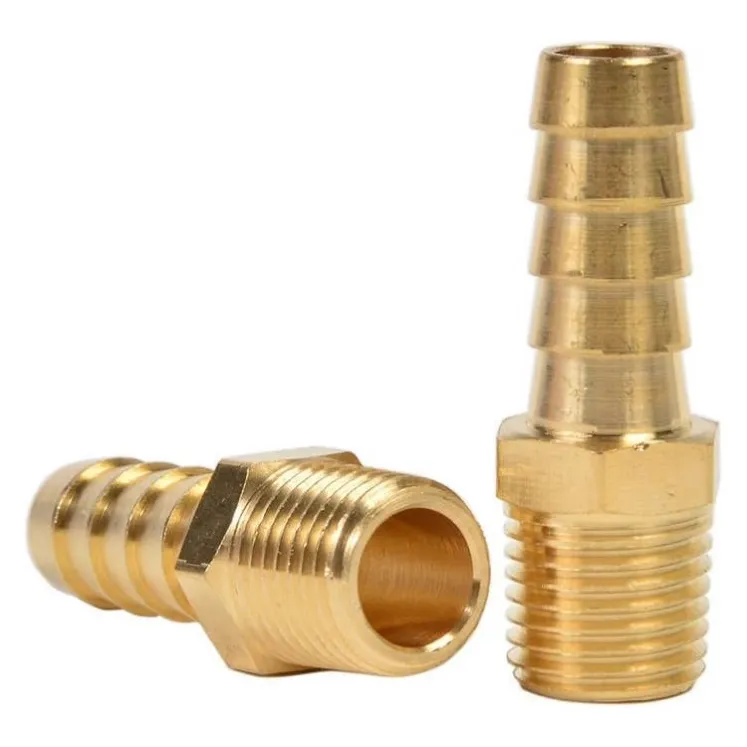
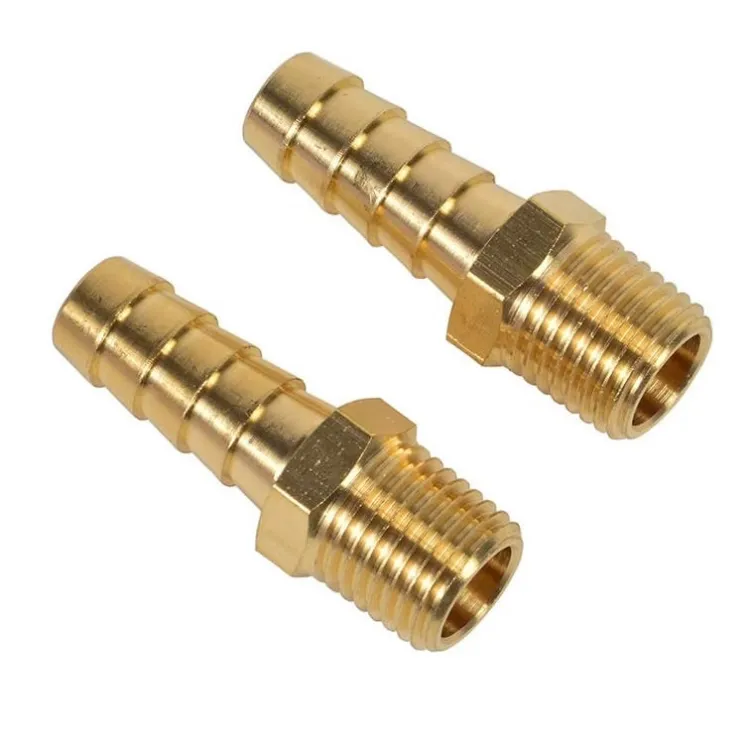
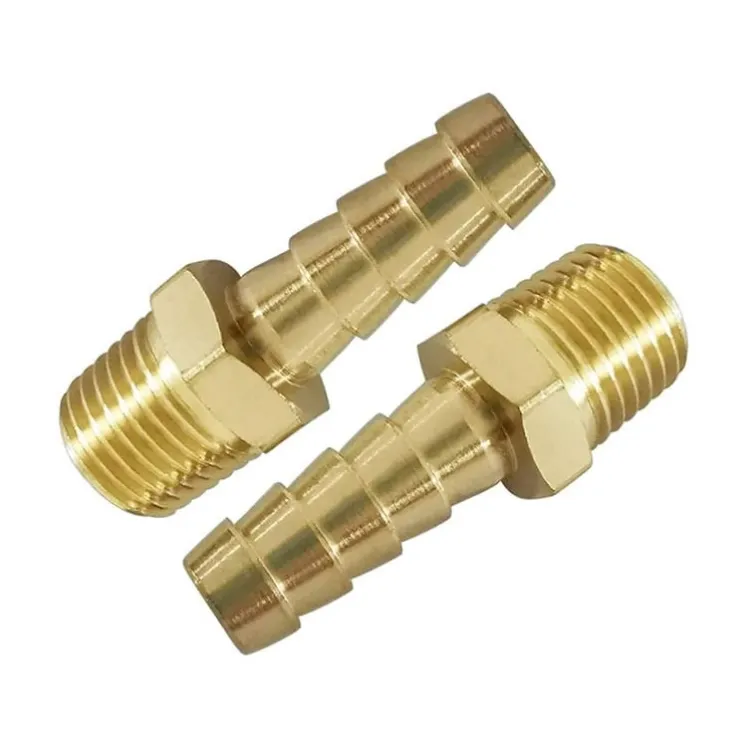
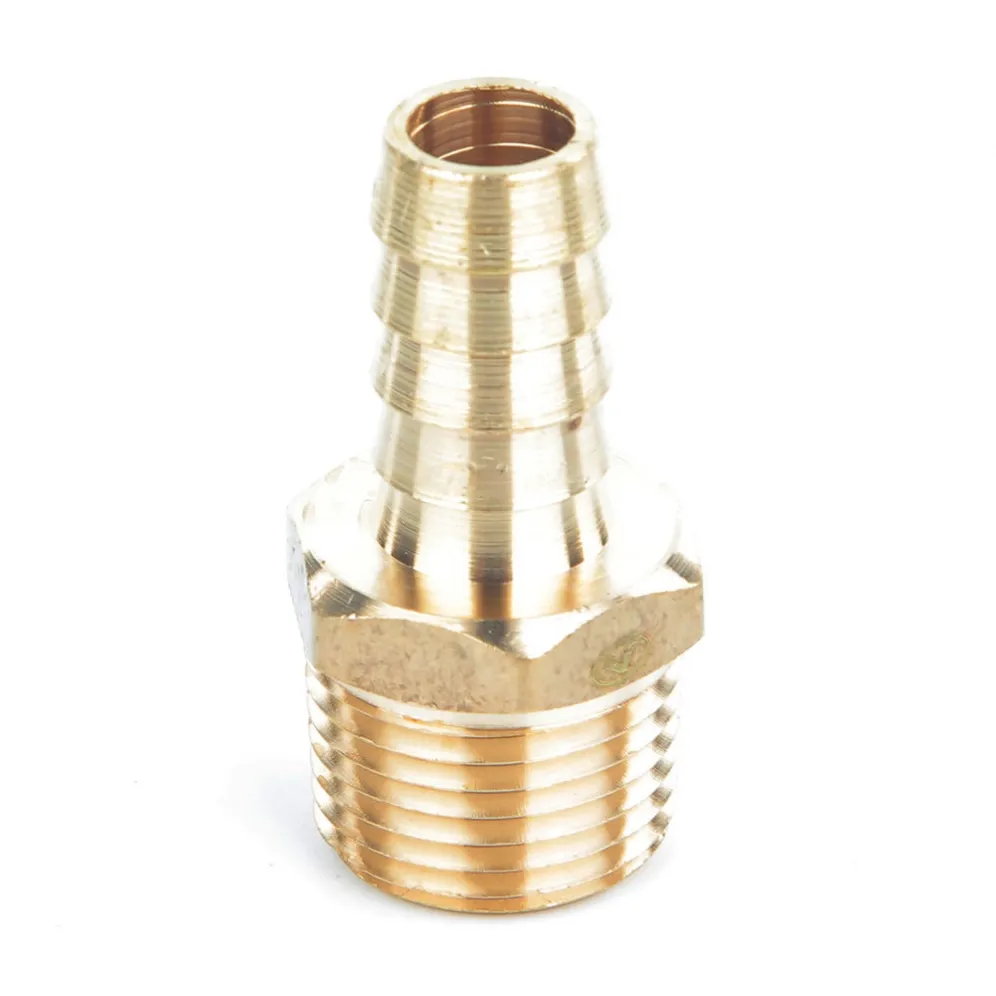
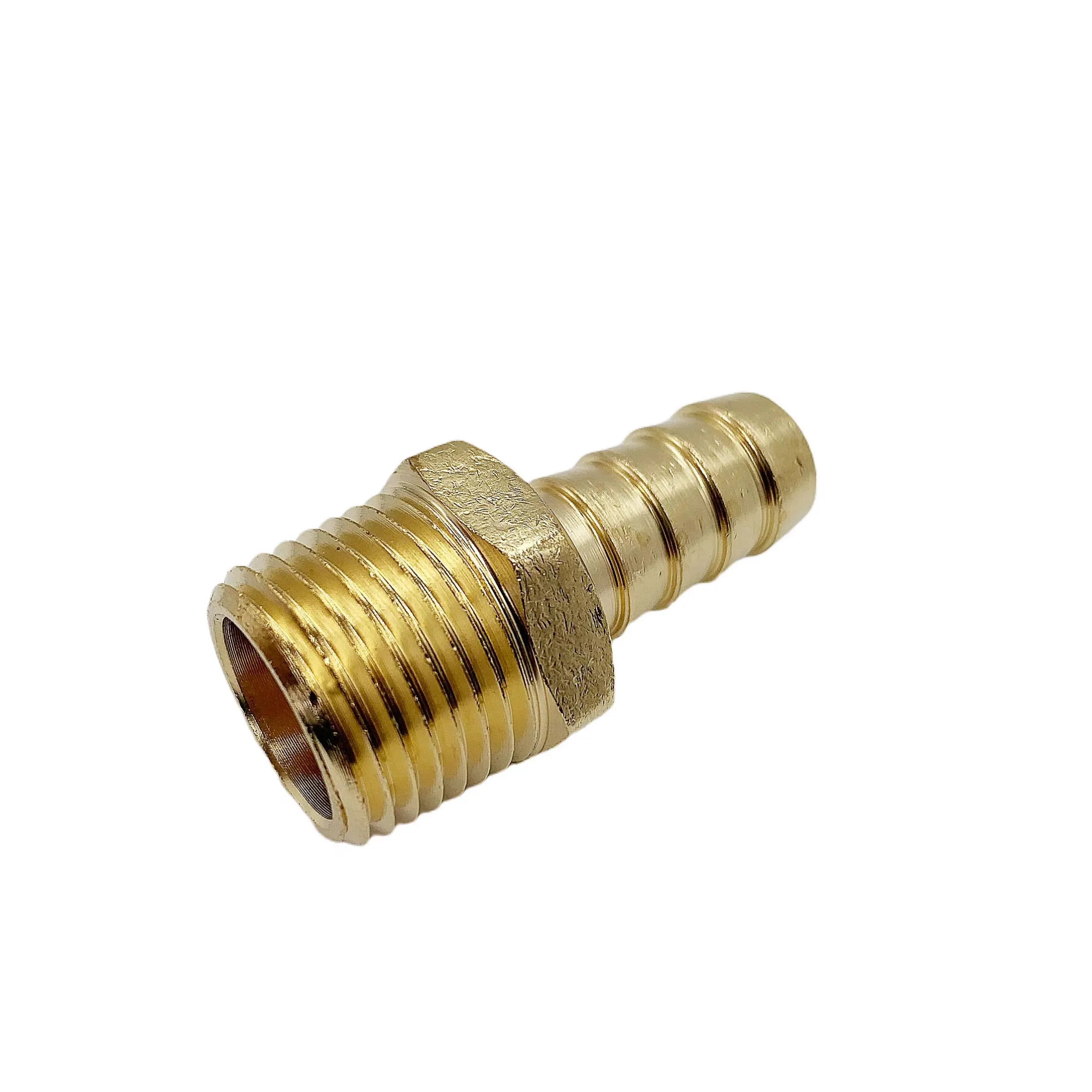
A hose barb fitting has a serrated profile at one end, pushed into flexible hose to grip its bore, with a thread, a second barb or another connection at the other end. We CNC machine brass hose barb fittings to your drawing for importers, distributors and equipment makers worldwide.
Where Hose Barb Fittings Are Used
Hose barb fittings are the standard way to connect flexible hose — rubber, PVC or polyurethane — into a low-pressure system. The hose is pushed over the barbs, the serrations bite into the hose bore, and the hose is normally secured with a clamp or a crimped ferrule so it cannot work off under pressure. The exception is the dedicated push-on profile, matched to a specific hose type and designed for use without a clamp.
Barb fittings serve in compressed air lines and air tools, water and coolant lines, fuel lines, low-pressure hydraulic return lines and pneumatic systems. They are found on machinery and equipment of many kinds, wherever a flexible hose meets a rigid port. As category guidance, barb fittings are a low-pressure connection method: they are not used for high-pressure hydraulics or for steam. Suitability for a given medium and hose type is confirmed by the buyer; we machine to the drawing supplied.
Construction and Specification
Barb profiles come in two broad forms. A single-barb fitting has one ridge and suits low-pressure duty, always with a clamp. A multi-barb fitting has two to four ridges and is the general-purpose form, giving a longer grip length and a more secure hold. The other end suits the port: male or female pipe thread, a second barb (hose mender), a flare seat, or a plain tube stem. Configurations include straight, 90-degree elbow and tee forms, in rigid and swivel versions.
Fittings are specified as hose ID by thread: the hose bore size, paired with the thread standard and size. Catalogue-typical shelf ranges cover hose IDs from 3/16 inch to 1 inch — a typical range for the part type, not a limit. Thread standards are specified on the drawing and commonly include NPT and NPTF, BSPT and BSPP, with SAE flare and swivel variants where the mating port requires them. BSP and NPT threads are not interchangeable, so both must be stated.
Your drawing defines the part we make: hose ID, barb major diameter, number of barbs, barb length and lead-in, hex size, thread standard and size, overall length and through bore. Brass is the common material for this family because it does not rust, resists corrosion in water and air service, machines cleanly with crisp barb edges, and seals well on tapered pipe threads.
How to Order
Send your drawing in DWG, PDF or STEP/STP format and we will review it and quote against it. Non-standard hose sizes, unusual barb counts, elbow and tee forms, and mixed connections such as barb by flare are all routine, because every fitting is produced to your drawing.
The minimum order quantity is from 1 piece, and samples are available in about 7 days, subject to the drawing, so the fit on your actual hose can be checked before a production order. We supply prototype quantities, small batches and repeat orders. All production is carried out under ISO 9001:2015 certified quality management at Shenzhen Andeyuan Plastic Hardware Co., Ltd. in Shenzhen, China, and we ship to importers, distributors and equipment makers worldwide.