Product Guide
CNC Machined Brass Fittings: What to Specify Before You Order
What to put on your drawing for custom brass fittings: the thread, the bore, the hex and the quantity, so the first quote comes back complete and correct.
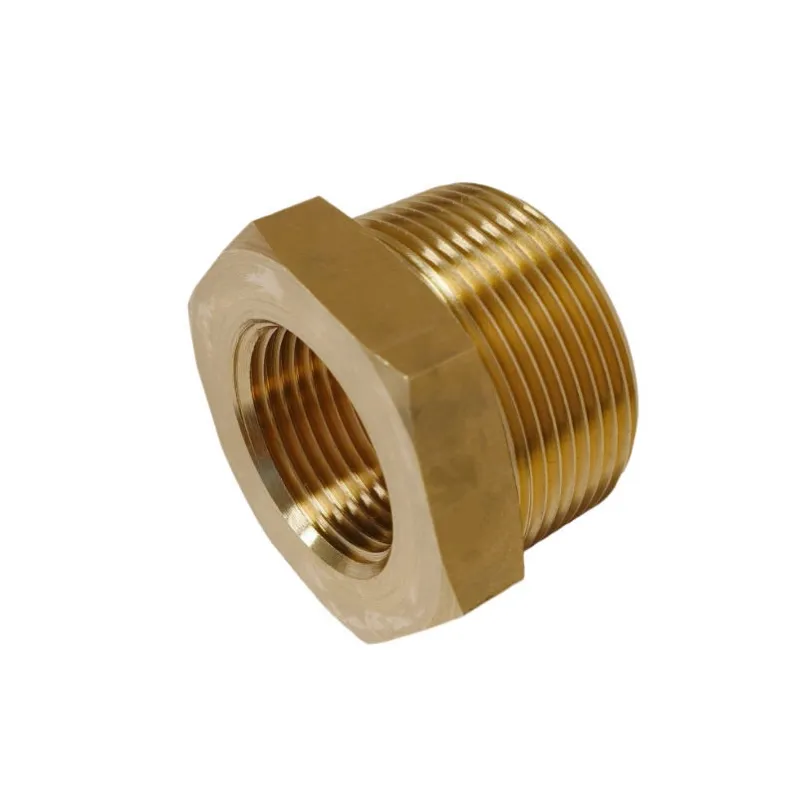
Five things on your drawing decide a brass fitting quote: the thread, the bore, the hex or grip form, the material note and the quantity. Specify all five and the first quote comes back complete. For importers and equipment makers ordering fittings to drawing, not stock.
You sent one hex nipple drawing to three suppliers. One quoted the same day, one asked what thread you meant, and one sent a price that changed when you confirmed the size. The fitting itself is small enough to hold between two fingers, but the questions around it are not, because everything a fitting does happens at its interfaces — where it screws in, what passes through it, and how it is tightened. Leave any of those vague on the drawing and three honest suppliers will quote three different parts.
What does a supplier check first on a brass fitting drawing?
A fitting has one job: connect two things and let something pass between them — fluid, air, or another component. That job lives entirely in the details. When a supplier opens your drawing, it reads the thread first, because the thread decides whether the fitting mates with your equipment at all. It reads the bore second, because the bore decides what flows through and whether a mating part passes or seats. Then it reads the outside form — the hex that a wrench turns, or the knurled band that fingers grip — because that decides how the fitting is installed. Material and quantity close the reading, because they decide the price.
If one of those five is missing, the quote either stops or silently assumes. A stopped quote costs you a round of questions. An assumed quote is worse: the supplier guesses the thread or the bore, prices the guess, and you find out at installation that the part in your hand is not the part in your machine. Most fitting disputes trace back to an assumption nobody noticed, on a drawing nobody finished.
A catalogue code does not rescue an incomplete drawing. A code describes a standard fitting made to someone else's specification, and your part usually differs from it in exactly the dimension that made you order a custom fitting in the first place — a longer thread, a different bore, a hex that fits a tighter space. If your drawing started from a catalogue part, write what you changed on the drawing itself.
How should you specify the thread so the fitting mates first time?
Write the thread exactly as your mating part requires it. State the size and the thread form your design uses, and state it for each end separately, because the two ends of a fitting are often different: one end screws into a port, the other takes a hose, a tube or a second fitting. A drawing that specifies one end and leaves the other as "same" will be quoted as drawn — and assembled as a surprise.
Say whether each thread is internal or external, and give the threaded length where it matters. If the fitting must screw into an existing port on your equipment, write that on the drawing: the supplier cannot see your machine, and the port is the one fact that decides whether the fitting works. Do not write "standard thread". There is no single standard across the equipment your fittings will meet, and the word tells the supplier nothing it can machine to.
Where the thread starts matters more than buyers expect. A chamfer or lead-in at the thread start is what lets the fitting engage by hand before the wrench comes out; if your assembly needs it, call it out rather than assuming it is automatic. The same applies to the face the fitting seats against: if a flat face or a shoulder does the seating in your design, dimension it, because the supplier will machine the face it sees on the drawing, not the one in your head.
What should you say about the bore, the hex and the knurl?
The bore is the fitting's working passage. State whether it runs through the part or stops inside it, and give the diameter your design needs. If the bore steps — wider at one end, narrower at the other — dimension each step and where it changes, because an internal step is invisible from outside, and a supplier who cannot see it on the drawing will not machine it. If something must pass through the fitting or seat inside it, say so; that one sentence explains the bore better than any tolerance.
The hex is how the fitting is tightened, and its across-flats size decides which wrench fits and how much torque the part can take. Give the across-flats dimension on the drawing, and if the hex sits in a tight recess in your equipment, note the space limit — a hex that is correct but unreachable is a fitting that cannot be installed. On hose fittings, the barbed end does the gripping: state the hose size your design uses and how many barbs the profile should carry, because the barb profile is what holds the hose, and it is machined from your drawing, not chosen from a shelf.
The knurl on a brass connector is functional, not decorative. It is the grip that lets fingers start and finish the connection without tools. If your connector is tightened by hand, say where the knurled band sits and how wide it is. If the knurl is only appearance, say that too — it changes how the supplier prices the part, and you should not pay for a grip nobody uses.
How much does the material note need to say?
One word is enough to start: brass. A drawing-first supplier machines the material stated on the drawing, and for fittings of this kind that statement is simply the material your design calls for. If your design depends on a particular grade of brass, write the grade your design specifies — the supplier will machine to your note, and the note is your responsibility to get right. What you should not do is leave the material off the drawing and let the quote guess it, or copy a material note from a different part without checking that your design actually needs it.
Quantity belongs in the same message. The minimum order is 1 piece, so a single fitting for a prototype or a trial fit is a real order, not a favour. But one piece and one hundred pieces are priced differently, because the setup work is spread across the batch, and a supplier who knows your repeat quantity can quote the first order and the repeat order honestly. State the quantity you need now and the quantity you expect to reorder, and say which of the two your delivery date hangs on.
What goes wrong when a fitting is quoted from a photo?
A photo shows the outside of a fitting and none of its working details. The thread form, the bore and the internal steps — the three things that decide whether the fitting works — are exactly the things a photograph cannot show. A supplier who quotes from a photo is pricing a silhouette, and the part that arrives will be that silhouette, machined well or badly, but not necessarily your fitting.
If a photo is all you have, use it for the only question it can answer: whether the part is worth assessing as a physical sample. A sample can be measured and drawn up again, but only after the supplier has seen it and agreed that it can be measured accurately enough to reproduce — and that agreement cannot be given in advance. Send the photo to ask, send the sample only after the supplier agrees to assess it, and expect no price and no delivery date until the assessment is done. That order of events protects you: the expensive mistake is not waiting for an assessment, it is paying for a batch of fittings quoted from a guess.
What to send today
- Your drawing file in DWG, PDF, STEP or STP format, with the revision letter in the file name.
- The thread specification for each end, written exactly as your mating part requires it.
- The bore: through or blind, its diameter, and any internal steps.
- The material line — brass, with the grade your design specifies if it depends on one.
- The quantity you need now and the quantity you expect to repeat.
- Your company name, your name and the email address the quotation should go to.
Send those six things and the first quote can come back complete. Send a photo and a catalogue code instead, and the honest answer is that the fitting cannot be quoted yet. For a straightforward enquiry, expect a reply from Lawson Lau within 30 minutes during working hours — on WhatsApp at +86 13713541226, or through the enquiry form.
FAQ
What is the minimum order quantity for custom brass fittings?
The minimum order is 1 piece. Every fitting is machined to your drawing, so a single piece for a trial fit and a repeat batch are both normal orders.
How long do samples of a brass fitting take?
Samples are usually ready in about 7 days, subject to the drawing. The sample schedule and the production lead time are both confirmed with the quotation.
Can you quote a fitting from a photo or a standard catalogue code?
No. A photo and a catalogue code do not show the thread, the bore or the internal steps, so neither can be quoted. Send a drawing — or ask whether a physical sample can be assessed, and send the sample only after the supplier agrees to assess it.